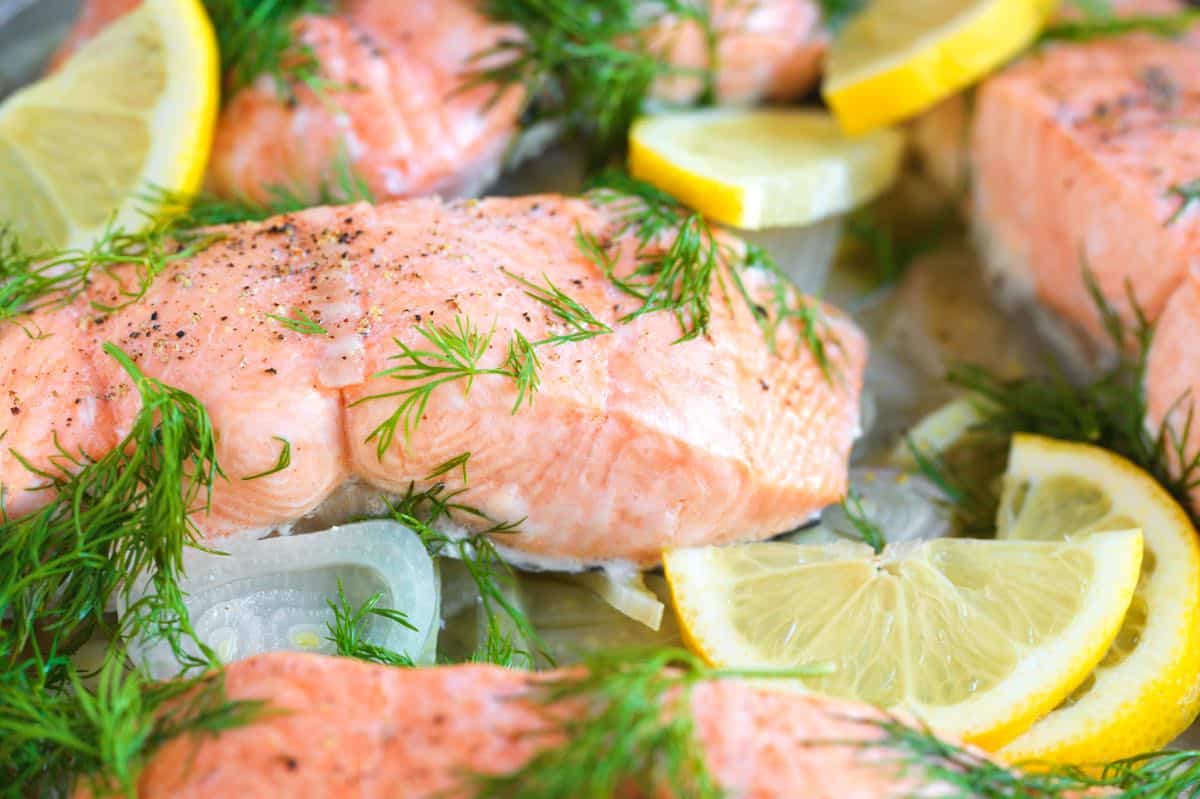
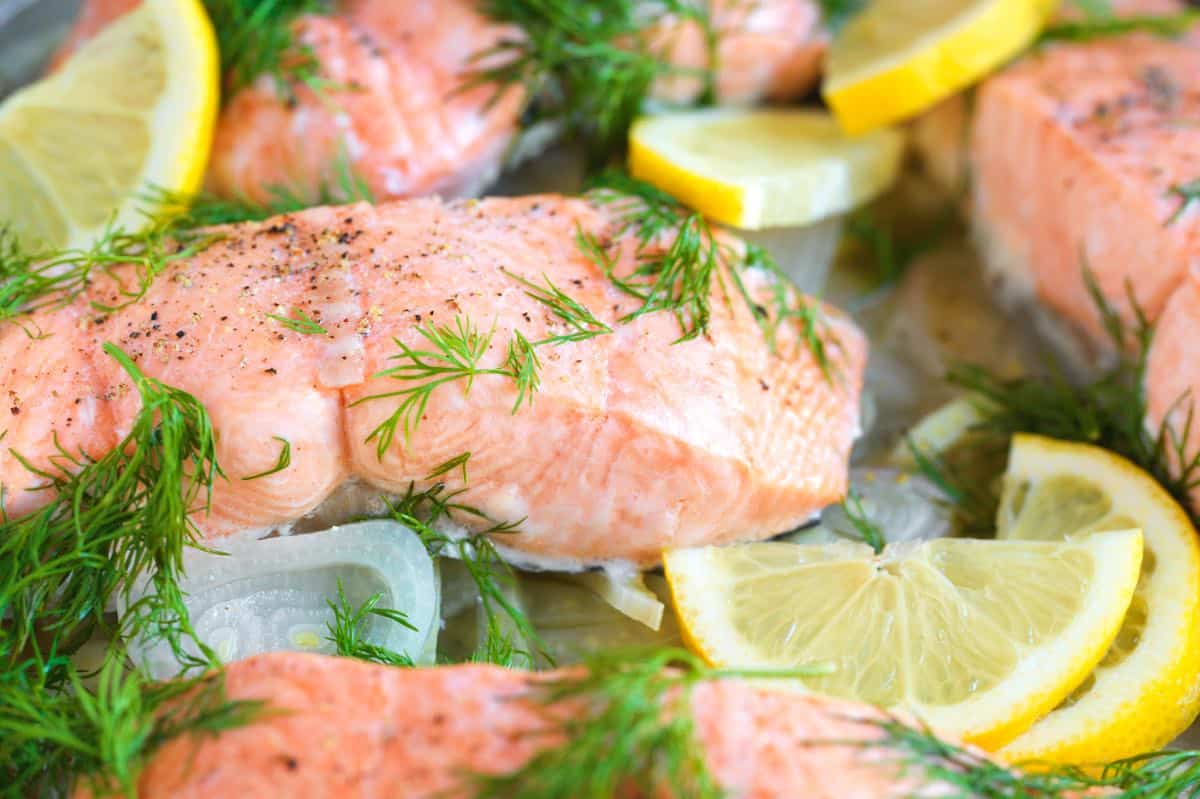
I’m convinced this poached salmon recipe makes some of the most tender, mouth-watering salmon. It’s also ridiculously easy!
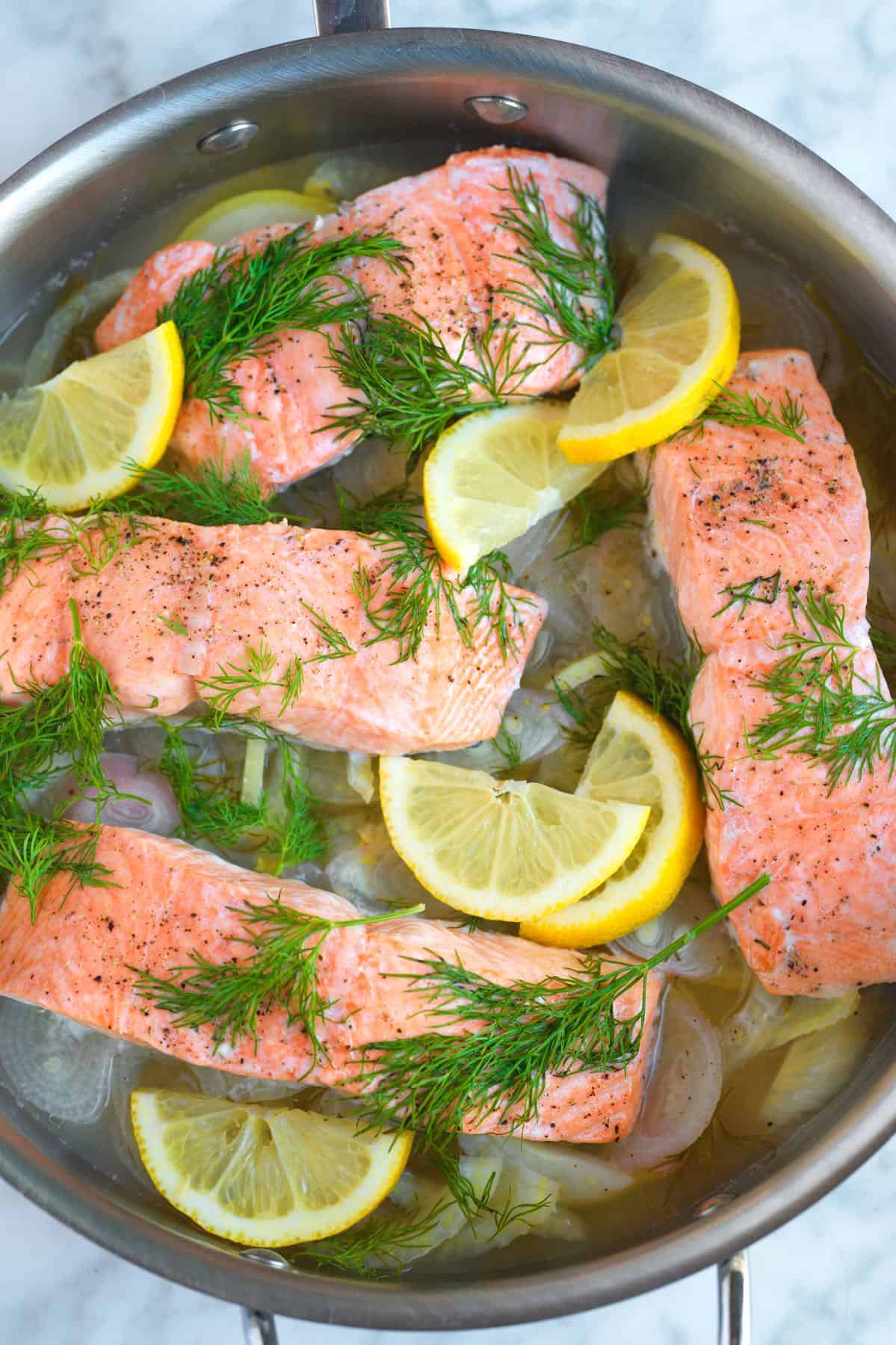
Poaching is genuinely one of the best ways to cook salmon. Here’s my go-to recipe, which once you try it, I’m betting you’ll become just as obsessed as I am. And while we are on the subject, I also LOVE poached chicken and poached shrimp!
This salmon turns out incredibly moist, soft, and not at all fishy. It’s perfect for topping your favorite salad recipes, flaked over toast, on top of creamy polenta and grits, or with veggies like my favorite roasted broccolini. It’s also incredible with a spoonful of hollandaise sauce or this dill sauce.
Key Ingredients
- Salmon: I use salmon fillets around 1 inch thick (the thicker fillets stay more tender and succulent). I also like fattier varieties of salmon, such as King, Coho, and Sockeye. We also love Steelhead in this recipe (similar to Atlantic salmon).
- Wine or Broth: I use a combination of wine and water for this recipe. A splash of white wine adds a lovely flavor. I’ve even used leftover Lillet Blanc with excellent results (I usually have it on hand to make this French onion soup)! If you’re out of wine, broth is a delicious substitute. Vegetable broth or a light chicken broth works well, and seafood stock is even better.
- Lemon: Sliced lemon is the classic choice for poaching salmon. Try limes or oranges for a fun twist.
- Shallot: I prefer shallots over onion for poaching. They have a gentle sweetness that works well with the salmon. Smashed garlic cloves or sliced sweet onion are great alternatives.
- Fennel: My favorite aromatic for salmon! Fresh fennel adds a lovely licorice flavor. I wish more people cooked with fennel. If you’re feeling fancy, toss some extra fennel into your cart to make our fennel and apple salad (it pairs perfectly with this).
- Fresh dill: Dill and salmon are a match made in heaven! I like scattering a lot of fresh dill into the pan. Other herbs like thyme, bay leaf, mint, and parsley are all great options.
Find the full recipe with measurements below.
How to Poach Salmon
Tip 1: Keep the skin on. I keep the skin on my salmon fillets. The skin is much easier to remove after cooking and is a barrier to heat from below, protecting the salmon from overcooking.

Tip 2: Use a skillet with a lid. You’ll need a skillet with a lid for this recipe. The poaching liquid does not need to cover the salmon. The lid will trap all the moisture in the skillet and help to gently cook your salmon. As the fish cooks, the aromatics will infuse their flavor into the fish. I just love it!
Serving Suggestions
This salmon is fantastic on salads. Try salads like my broccoli slaw, kale salad, or a classic Caesar. Cucumber and salmon are meant for each other, so I love this creamy cucumber salad, zippy vinegar cucumber salad, or avocado and cucumber salad.
This is also amazing, added to sandwiches and wraps. Consider this homemade pita, salad greens, and a drizzle of Tzatziki sauce! Leftover poached salmon would also be lovely in our salmon patties recipe (which usually calls for canned salmon).
More Light Seafood Dishes
Perfect Poached Salmon
-
PREP
-
COOK
-
TOTAL
Poaching salmon is one of our favorite ways to cook salmon! It cooks quickly and stays moist, flaky, and tender. The aromatics (lemon, shallot, fennel, and dill) are optional but add lots of delicious flavor. You can use water, broth, or a combination of water and white wine for the poaching liquid. If you love this recipe, you may also love my poached chicken and poached shrimp!
Serves 4
Watch Us Make the Recipe
You Will Need
4 skin-on salmon fillets, 6 ounces each
1 cup water
1/2 cup white wine or broth
1 lemon, sliced
1 shallot, sliced
1 medium fennel bulb, sliced
6 sprigs fresh dill or other fine herb like parsley, cilantro or mint
Salt and fresh ground black pepper
Directions
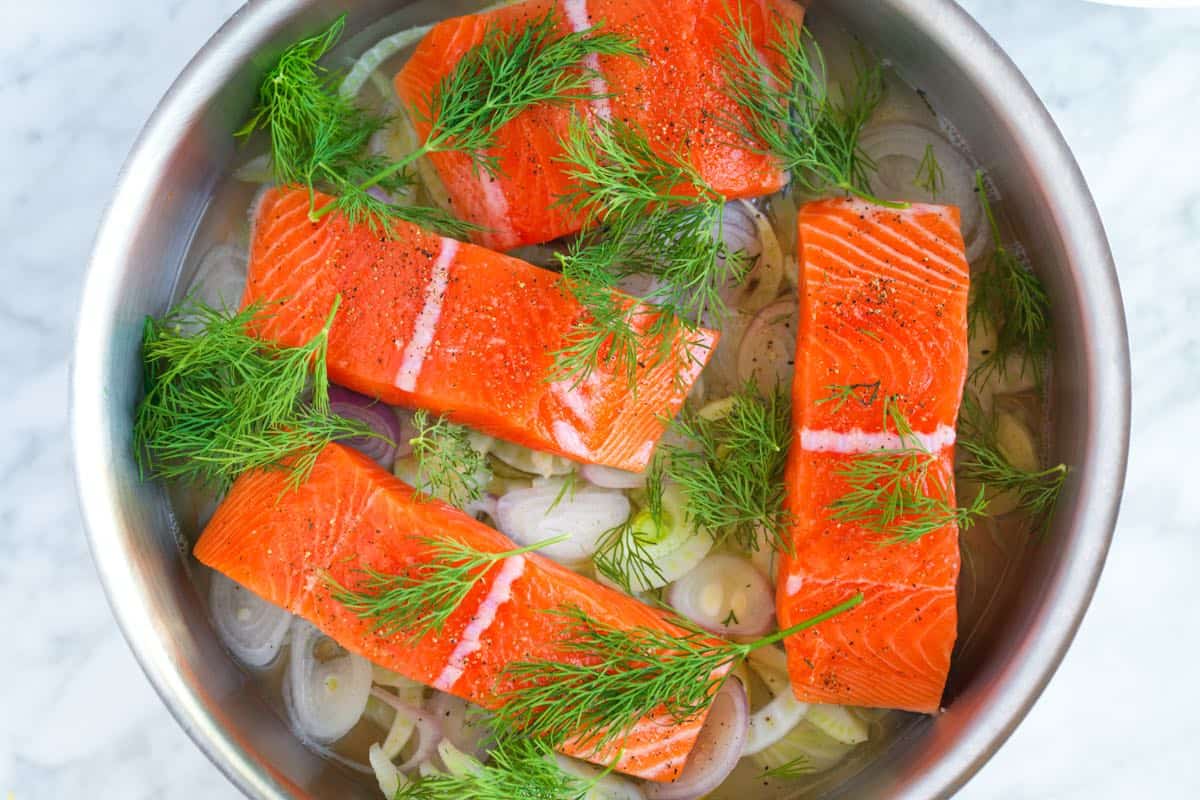
1Make a bed of lemon slices, shallot, and fennel in the bottom of a wide skillet with a lid.
2Lightly season the salmon fillets with salt and pepper, then place them, skin side down, on the lemon slices, shallot, and fennel.
3Scatter fresh dill around the pan and on top of the salmon.
4Pour in the water and wine. The liquid does not need to cover the salmon. Since we are cooking it with the lid on, the salmon will poach, even if the liquid does not cover them.
5Place the skillet over medium-high heat and bring to a simmer. When the liquid is aggressively simmering, turn the heat to low and cover the skillet with its lid.
6Cook until an internal temperature thermometer reads between 125°F to 130°F or when you pierce the thickest part of the salmon with a fork, 5 to 12 minutes, depending on how thick the salmon fillets are. Serve.
- Storing
1Your salmon will last in an airtight container in the fridge for up to 4 days or frozen for up to 1 month. Thaw in the refrigerator overnight before reheating.
2To reheat, place it in an oven-safe dish. Add a splash of water or broth for extra moisture. Cover the dish with aluminum foil to prevent drying. Bake for about 15 minutes, or until it reaches an internal temperature of 125°F to 130°F.
Adam and Joanne’s Tips
- Skin-on fillets: The skin is much easier to remove after cooking, and it acts as a barrier for heat coming from below the fillets, protecting them from overcooking.
- Your poaching liquid does not need to cover the fish: Aim for the liquid to come about a quarter of the way up the sides of the salmon fillet. The gentle heat and the lid will create a steamy environment, poaching the salmon beautifully.
- Seasoning the salmon: I use a simple seasoning of salt and pepper or this seasoned salt and lightly sprinkle it on both sides of the fish. If you have a favorite seafood rub, feel free to add it.
- The nutrition facts provided below are estimates.
Nutrition Per Serving
Serving Size
1 fillet
/
Calories
280
/
Total Fat
10.1g
/
Saturated Fat
2.2g
/
Cholesterol
76.5mg
/
Sodium
203.6mg
/
Carbohydrate
2.6g
/
Dietary Fiber
0.8g
/
Total Sugars
1.1g
/
Protein
37.1g

We are Adam and Joanne Gallagher, the creators of Inspired Taste. Established in 2009, Inspired Taste grew from a childhood dream into one of the internet’s most trusted recipe sites with hundreds of reliable recipes, step-by-step videos, and expert tips.More About Us
Leave a Reply